What Does Saudi Vision 2030 Actually Mean for Brand and Design?
- MEIYO
- Jul 10
- 8 min read
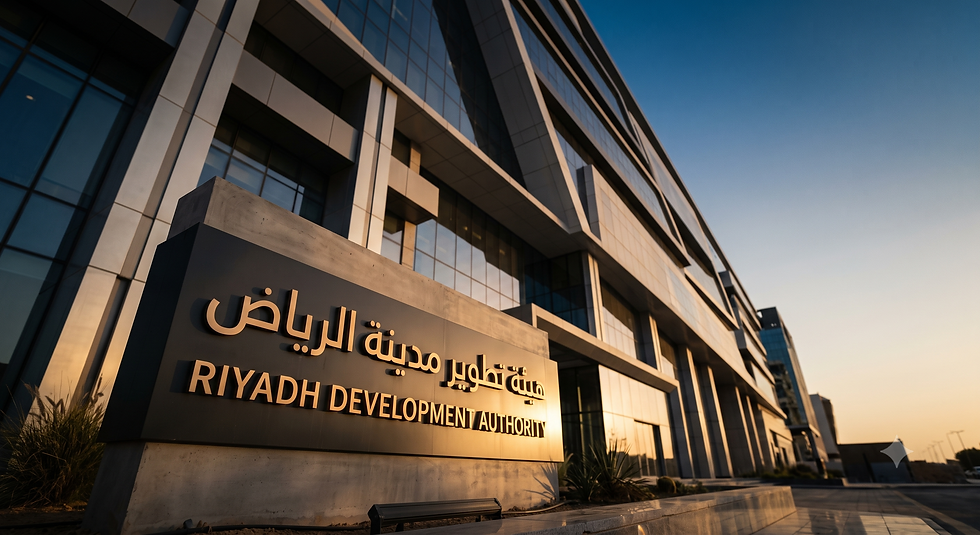
Saudi Arabia is in the middle of one of the most ambitious national transformation programmes in modern history. Vision 2030 — the strategic framework launched in 2016 under Crown Prince Mohammed bin Salman — set out to diversify the Kingdom's economy away from oil dependency, build a tourism and entertainment industry from near scratch, expand the private sector, and position Saudi Arabia as a global cultural and commercial destination. Nearly a decade in, the scale of what's actually being built is beginning to become visible: NEOM, the
Red Sea Project, Diriyah, AlUla, Qiddiya — megaprojects of a kind and ambition that have few precedents.
What gets discussed less often is what this transformation means for brand and design specifically. Not as a peripheral consideration, but as a core requirement of a country that is simultaneously building new industries, attracting international businesses, developing domestic consumer brands, and presenting itself to the world as something it has never been before. That is, at its core, a design challenge. And it's one of the largest design opportunities in the world right now.
A Country Building Its Visual Identity in Real Time
Saudi Arabia is, in a meaningful sense, designing its national brand identity while the building work is happening. Tourism initiatives need visual identities, wayfinding systems, and communication that speak to international visitors who have no prior frame of reference for Saudi Arabia as a destination. New cities need brand languages before they have residents. Cultural institutions need identities that communicate both local heritage and global ambition simultaneously.
The AlUla project — the development of one of the world's most significant archaeological and natural landscapes as a cultural destination — required a brand identity that could hold Saudi Arabia's ancient heritage and its contemporary ambition at the same time, communicated to audiences in Saudi Arabia, the wider Arab world, Europe, Asia, and the Americas simultaneously. That's an extraordinarily complex brand brief, and its execution is a direct consequence of Vision 2030's requirement that new Saudi institutions communicate at a global standard.
This pattern repeats across the Vision 2030 landscape. Every new entity — tourism authority, cultural institution, entertainment district, sports body — needs a brand identity. And the standard they're being held to is not the domestic Saudi market standard of five years ago. It's a global standard, because Vision 2030's ambition is explicitly global.
The Consumer Market Has Changed Fundamentally
The design opportunity in Saudi Arabia is not limited to the megaprojects. The consumer market transformation that Vision 2030 has enabled is arguably more commercially significant for brand and design work.
Female labour force participation has risen from 17% to over 33% since Vision 2030 launched — a demographic shift with direct commercial consequences. More women earning means more women spending, and the cultural relaxation of dress codes has expanded what Saudi women buy, wear, and do in public in ways that have created entirely new consumer categories or transformed existing ones. Female-focused fashion, beauty, wellness, activewear, and entertainment brands are all operating in a market that barely existed at scale a decade ago.
The under-35 demographic — which represents a significant majority of Saudi Arabia's population — is mobile-first, digitally native, brand-conscious, and increasingly open to homegrown Saudi brands that carry a distinct design perspective and cultural identity. Saudi e-commerce fashion sales grew more than 25% year-on-year in 2024–2025. Saudi consumers who were historically loyal to European luxury houses are increasingly open to independent and regional brands that offer design distinctiveness and cultural relevance.
This creates a specific brand design opportunity: the Saudi consumer is ready for premium homegrown brands that don't look like imports or imitations, that carry genuine Saudi cultural identity alongside contemporary design quality. The brand that occupies that territory authentically and early builds equity that international competitors entering later will struggle to replicate.
The F&B and Hospitality Explosion
Saudi Arabia's entertainment and hospitality sector has grown at an unprecedented rate since Vision 2030 began. The Kingdom went from having almost no public entertainment infrastructure to hosting Formula 1, heavyweight boxing, WWE, global music concerts, and the Asian Winter Games in 2029, with the FIFA Men's World Cup in 2034 on the horizon.
The F&B sector has been transformed proportionally. Riyadh and Jeddah now host international restaurant groups, homegrown Saudi F&B concepts, and a competitive casual dining market that didn't exist at this scale five years ago. Every one of these businesses needs a brand — a name, a visual identity, a spatial design language, a digital presence. The standard being set by the international brands entering the market raises the bar for every homegrown concept competing alongside them.
The F&B branding opportunity in Saudi Arabia right now is significant and specific: homegrown Saudi F&B brands with genuine cultural roots and contemporary design quality can build equity in a market where the international competitors, however well-resourced, can't claim authenticity. The Saudi coffee concept, the Saudi fine dining brand, the Saudi casual concept that carries a specific regional food story — these have something international brands entering the market cannot replicate. Design that expresses that authenticity with genuine craft is the work.
NEOM and the Megaproject Design Brief
NEOM deserves specific attention because it represents something genuinely unprecedented in the history of urban development and, by extension, in the history of brand and design work.
NEOM is a planned region in northwest Saudi Arabia covering more than 26,500 square kilometres, designed from scratch to be a global model for sustainable urban living and technological innovation. The Line — the most discussed element — is a 170-kilometre linear city designed to house up to 9 million people with no cars, no streets, and complete automation. Oxagon, Sindalah, Epiq — each component of NEOM is a separate urban concept with its own brand identity requirements, its own visual language, its own communication challenge.
The design brief here is unlike anything that exists elsewhere in the world. These are not extensions of existing cities or brands. They are new entities that need to communicate their vision to potential residents, investors, business partners, and global media simultaneously, before the physical infrastructure exists to demonstrate what they're claiming to be. That is an almost entirely brand-and-design challenge — making something that doesn't yet fully exist feel credible, aspirational, and real enough to attract the investment and attention it needs to become real.
Whether NEOM's ambitions fully materialise in the form currently described is genuinely uncertain. What's not uncertain is that the design work required to support a project of this kind — at this scale, in this market, with these international ambitions — is significant and ongoing.
The Arabic Identity Question
One of the more interesting tensions in Vision 2030's design landscape is the question of how Saudi brands balance global aspiration with local cultural identity. International brands entering Saudi Arabia face a version of this in reverse — how to localise without losing the qualities that made them internationally relevant.
For homegrown Saudi brands, the question is how to communicate contemporary quality and international ambition without losing the cultural authenticity that constitutes their most durable competitive advantage. The answer that the most interesting Saudi brands are arriving at is that these goals are not in tension — that a brand grounded in Saudi heritage, designed with genuine contemporary craft, and communicated through both Arabic and English with equal care is more distinctive globally than a brand that has abandoned its roots in pursuit of generic international appeal.
By 2025, brands that fail to adopt Arabic-first strategies risk alienating a significant share of their audience. This applies to both the domestic Saudi market and the regional GCC market. Arabic-first doesn't mean English-second — it means the Arabic experience of the brand has been designed with the same rigour and care as the English one, rather than translated from it.
The Retail Design Investment
Saudi Arabia's retail investment is growing significantly as Vision 2030 shifts consumer spending patterns and attracts international retail brands to the Kingdom. The design standard being set by flagship international retail entries — the architectural fit-outs, the spatial design, the in-store experience — raises the expectation for every retail brand operating in the same environment.
Saudi retail consumers have high expectations for the physical quality of the retail experience. A brand that has invested in premium product and premium marketing but whose retail space feels below the standard of its competitors is communicating a gap that buyers notice. Retail design in Saudi Arabia — the spatial identity, the fixture design, the material quality, the wayfinding — is a brand touchpoint that carries significant commercial weight.
The upcoming World Expo 2030 in Riyadh will further cement Saudi Arabia's status on the global cultural stage. For brands, this means an increasing need to craft experiences that are locally relevant yet globally resonant. International brands must go beyond surface-level localisation and invest in deep cultural engagement.
What This Means for Studios and Brands Working in Saudi Arabia
The design opportunity that Vision 2030 has created in Saudi Arabia is genuinely significant — for Saudi brands building their identities, for international brands entering the market, and for design studios that can work across the full range of requirements the transformation is generating.
The brands that will benefit most from this moment are the ones that understand it as a cultural transformation rather than just a commercial one. Saudi Arabia is not simply becoming a larger version of a familiar Gulf market. It's becoming something distinct — a country with deep historical roots, a rapidly evolving contemporary culture, a young and digitally sophisticated population, and ambitions that are genuinely global in scale. Brand and design work that takes all of that seriously, rather than treating Saudi Arabia as a market to be entered with minimal adaptation, will produce work that lasts.
As Paul Rand observed: "Design is the silent ambassador of your brand." In a country that is actively redesigning its own identity on a national scale, that observation carries particular weight. The design decisions being made in Saudi Arabia right now — for institutions, brands, cities, and experiences — are not decorative. They are foundational. And the studios and brands that understand that are positioned for work that matters.
FAQs
1. What is Saudi Vision 2030, and why does it matter for brands?
Saudi Vision 2030 is a national initiative to diversify Saudi Arabia's economy beyond oil by investing in sectors such as tourism, healthcare, technology, entertainment, manufacturing, and infrastructure. For businesses, it creates new opportunities while also raising expectations around branding, customer experience, and digital presence as competition continues to grow.
2. How is Saudi Vision 2030 changing the demand for branding and design?
As new businesses enter the market and existing companies expand, differentiation has become increasingly important. Organizations are investing in brand strategy, visual identity, website design, and customer experience to build trust, attract investment, and connect with both local and international audiences.
3. Why is brand strategy important for businesses entering the Saudi market?
Entering Saudi Arabia requires more than translating marketing materials into Arabic. Businesses need to understand local culture, customer expectations, and market positioning while maintaining a consistent global identity. A well-defined brand strategy helps companies build credibility and communicate their value effectively in a rapidly evolving market.
4. Which industries are seeing the biggest branding opportunities under Saudi Vision 2030?
Industries such as real estate, hospitality, healthcare, fintech, tourism, education, manufacturing, logistics, and technology are experiencing significant growth. As these sectors become more competitive, businesses are increasingly using branding, digital experiences, and design to differentiate themselves and build long-term customer trust.
5. How can a design studio support businesses aligned with Saudi Vision 2030?
A multidisciplinary design studio can help businesses develop brand strategy, brand identity, websites, user experiences, packaging, and communication systems that support long-term growth. By combining strategic thinking with design execution, companies can create stronger customer experiences and position themselves more effectively in Saudi Arabia's evolving business landscape.


Comments